The Project
THE PROJECT: “Powerful women and outstanding children in Pre-Roman Umbria: Understanding inclusive societies with foreign peoples through an integrative approach of molecular anthropology, archaeology and virtual design” funded as part of a PNRR PRIN Project: 2022 (Prot. P2022LATB9) lasting 24 months, aims to understand inclusive societies with foreign peoples through an integrative approach of molecular anthropology, archaeology and virtual design.
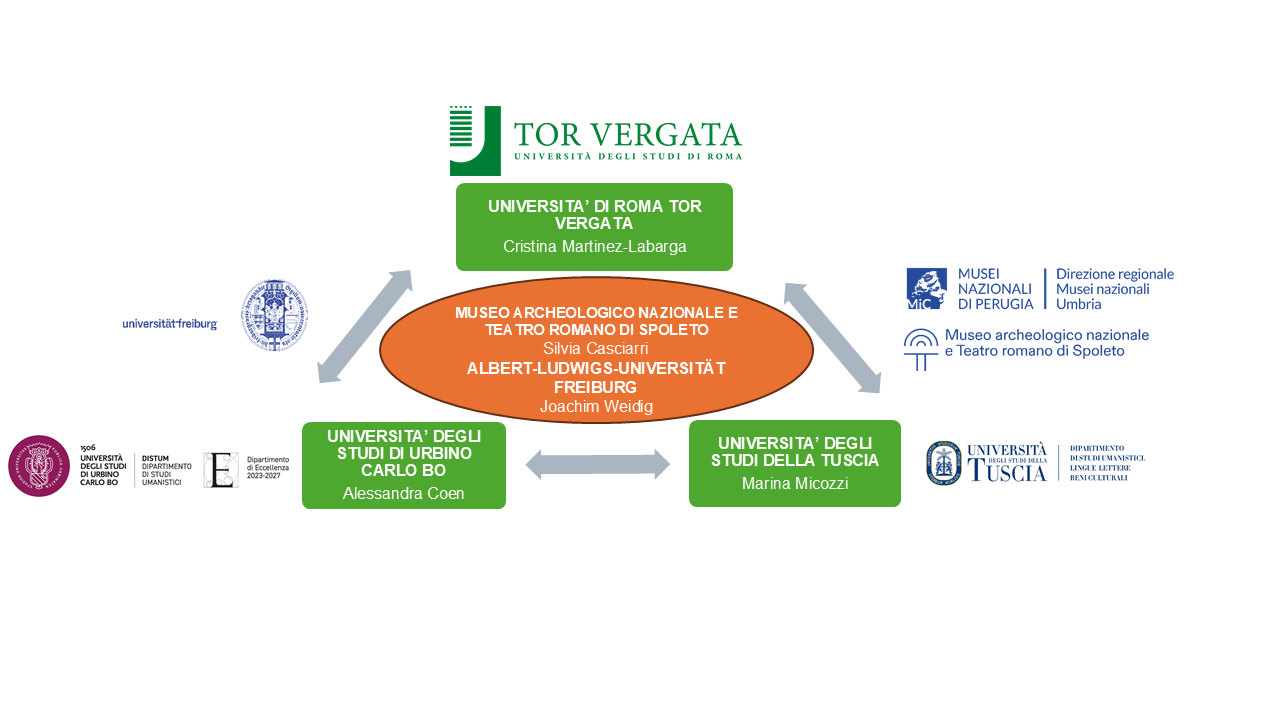
The project is divided into three research units (Department of Biology, University of Rome Tor Vergata; Department of Humanities, University of Urbino Carlo Bo; and Department of Humanities Studies. Languages, Literature, Cultural Heritage of the University of Tuscia, Viterbo) and involves collaboration with the National Archaeological Museum and Roman Theatre of Spoleto and the Albert-Ludwigs-Universität Freiburg.
ABSTRACT OF THE PROJECT
Bioarchaeological studies of the last decade have demonstrated the value of digging into our past through multidisciplinary approaches, revealing biologic and cultural trajectories in human evolution previously completely unexplored. A crucial time in the history of the Italian peninsula is represented by the pre-Roman era, when the Italian territory was inhabited by populations with distinctive languages and traditions, the Italics. Yet very little is known by one of the oldest Italic populations, the Umbrians. By conducting multidisciplinary bioarcheological methods, this project aims at shedding light on the genetic ancestry, lifestyle, diet, and health of the inhabitants of a pre-Roman town in Central Italy, Spoleto (Umbria).
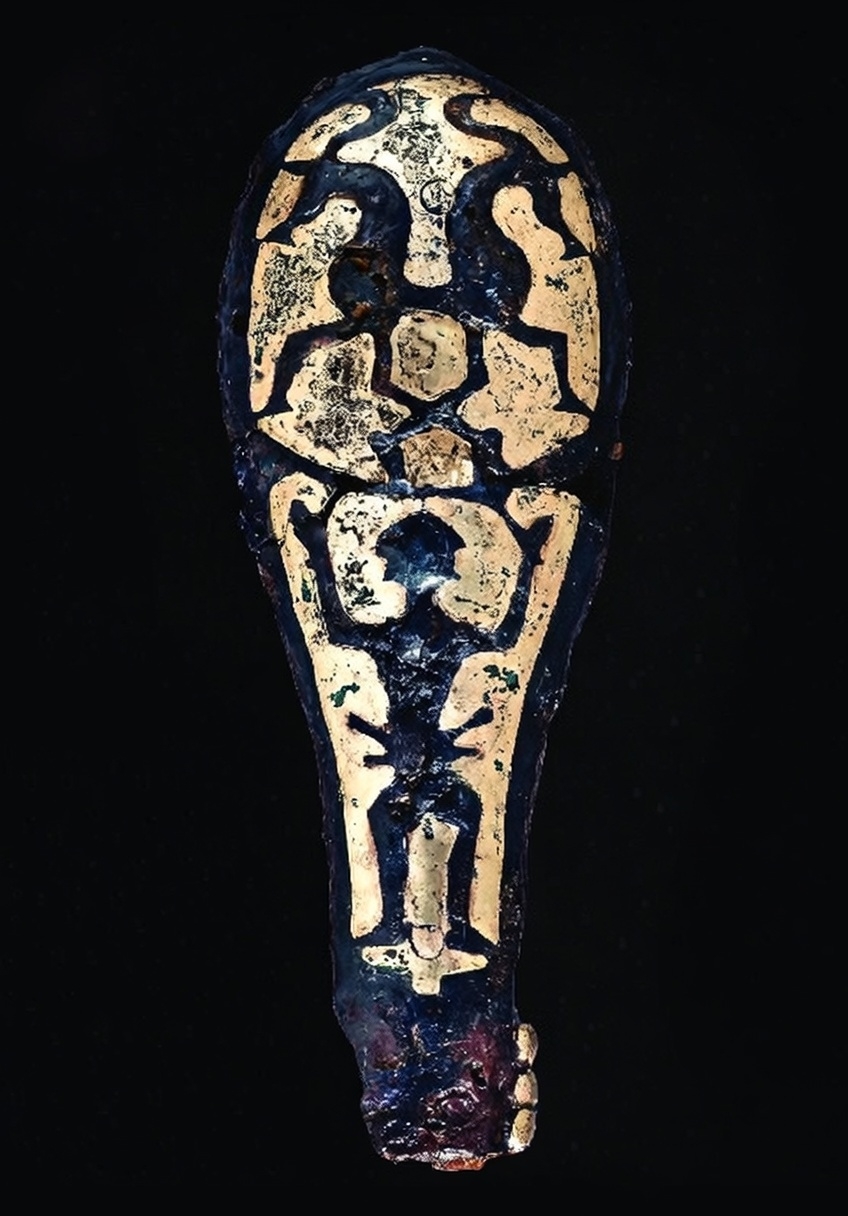
The treasure trove of funerary evidence gathered by archaeological investigations at the Necropolis of Piazza d’Armi at Spoleto (2008-2011), opened new scenarios on the role of women and children in this society between the end of the 8th and the middle of the 6th century BCE. Furthermore, evidence of allogenic nuclei within the community seem to witness the role of Spoleto as bridge with other Italic populations from Central Italy. The unique features of the necropolis of Piazza d’Armi are testimony to the inclusive nature of this pre-Roman center, open to accept foreign people in the upper classes of society and to confer symbolic power to children.
Three Research Units (RUs) have been involved in this project. At the RU of the University of Rome Tor Vergata, the anthropologists have analyzed skeletal remains from 52 individuals from Piazza d’Armi, informing on paleodemographic, morphometric, occupational, and pathological stress markers. From the same individuals, biomolecular analyses (from paleogenomics to metagenomics and stable isotope measurements) have unlocked information on genetic ancestry, mobility patterns, health and dietary patterns. This has allowed important archaeological questions around the origins of the people from Spoleto and their complex societal structure to be pursued, some of which are already apparent from grave goods, but which remain hypothetical without compelling multidisciplinary bioarcheological evidence.
The two RUs of Urbino and Viterbo Universities have further strengthened the multidisciplinary effort of this project by tackling from an archaeological perspective question around kinship and social relations, family relationships, social upper class and human mobility (in particular of women and their children) in Spoleto.
Attention has been given to the dissemination of the results which have been used for the new set-up of the Archaeological Museum of Spoleto that is currently being planned. Various multimedia products including virtual reconstructions have been set up to tell the story of the archaeological site, explain the various findings, the multidisciplinary approach and the topics tackled (mobility, diet, health).